In this article
You'll learn how to:
- share your Catalog with clients and industry contacts
- opt in to MultiDISCO Search and the Discover Music area
- add your Catalog link to key touchpoints
- understand what it takes to get sync placements
- avoid common promotion mistakes
Start by making it easy to find
Once your Catalog is live, the goal is simple - make sure the right people know it exists and can get to it instantly.
A few high-value places to put your Catalog link:
- your email signature
- your website, ideally as a prominent "Search our catalog" button
- bulk email campaigns to your contact database
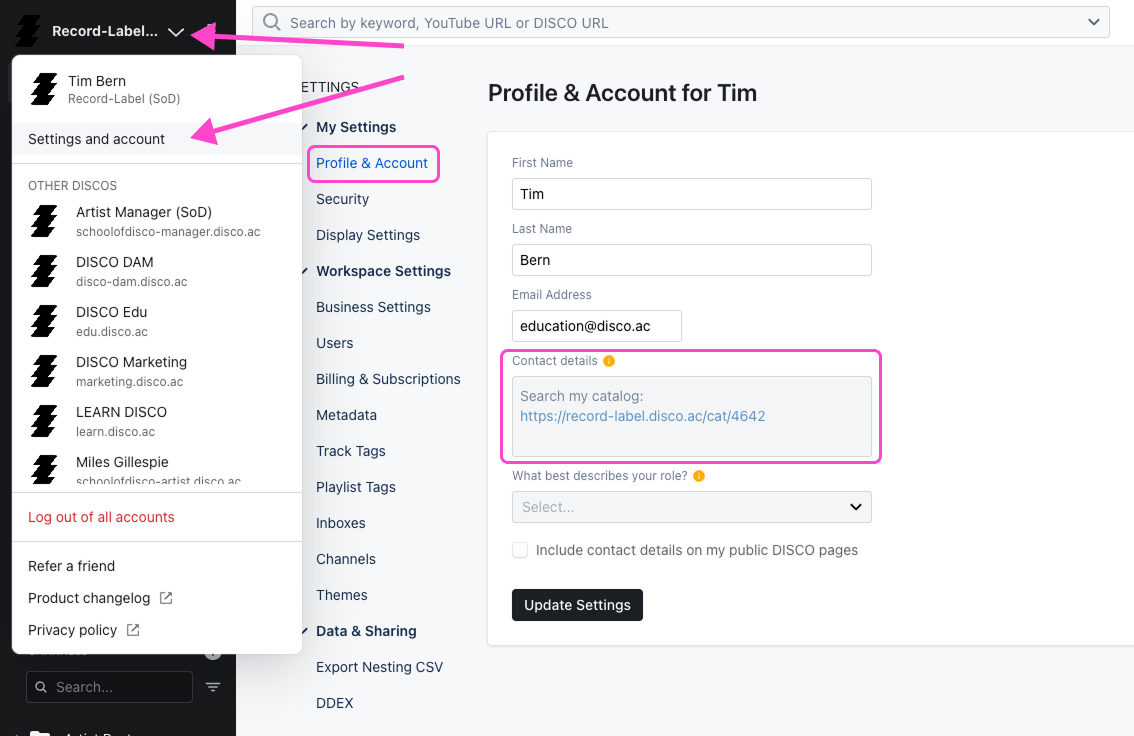
- your DISCO profile contact details, so it appears in the footer of every shared playlist
- direct invites sent from the Clients section of the Catalog CMS, which pre-authorizes access for close contacts
These are not one-off actions. The best-performing Catalogs are ones that stay consistently in front of people - through regular updates, new releases added, and ongoing outreach that gives supervisors a reason to come back.
Opt in to MultiDISCO Search
This is the highest-leverage thing you can do for passive discovery.
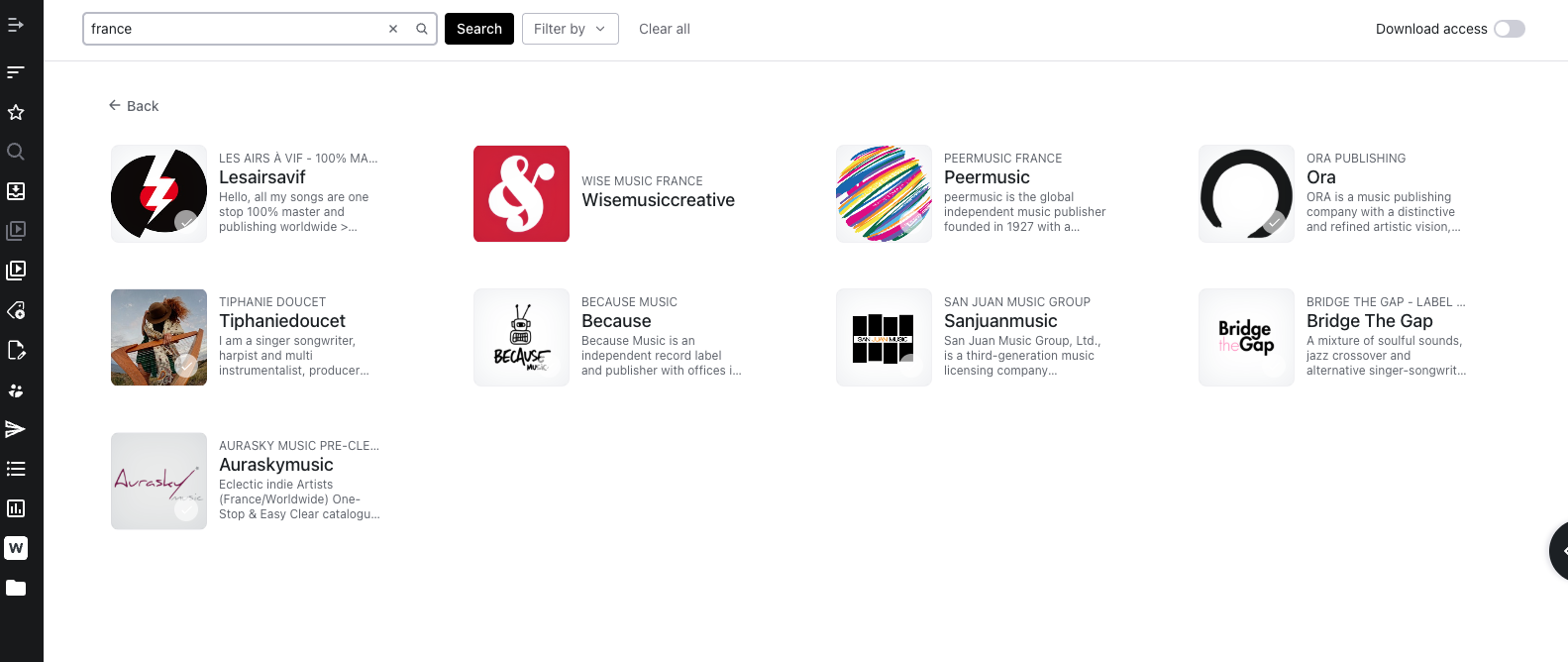
When you set your Catalog to Easy Access in the Access and Promotion settings, your tracks become part of MultiDISCO Search - built into every verified music supervisor DISCO account. When a supervisor searches inside their DISCO, your tracks appear alongside results from their own library, surfaced by the same search that finds everything else they already trust.
One search. Thousands of catalogs. The best-matching tracks surfaced instantly.
To opt in, open your Catalog CMS, navigate to Access and Promotion, and select Easy Access. That is all it takes. From that point, vetted supervisors have pre-approved download and Save to DISCO permissions, and your music is discoverable across the whole community around the clock.
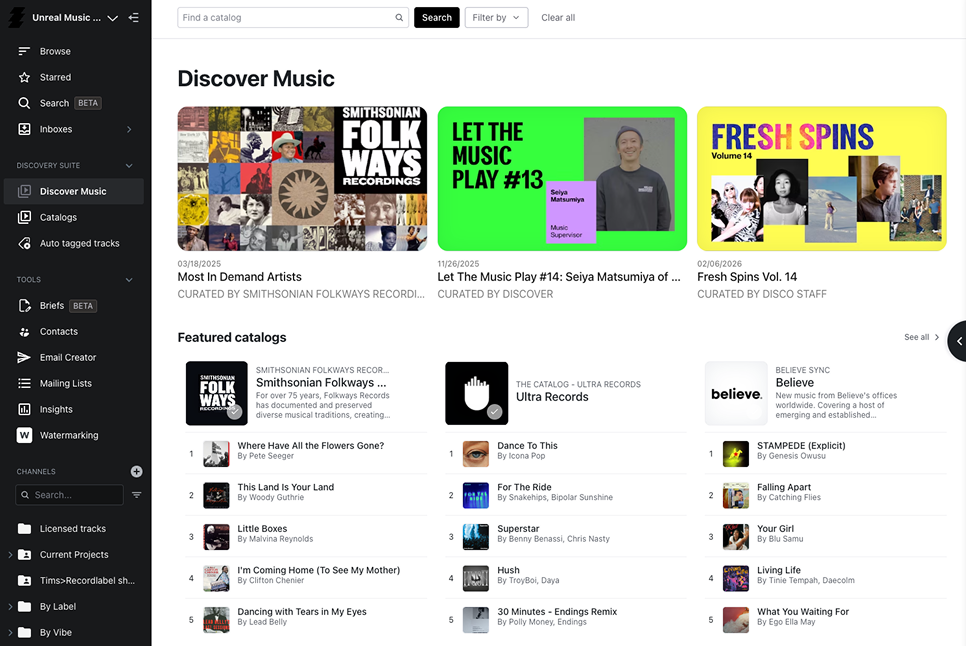
Make sure your Catalog description is filled in before opting in. Supervisors can search Catalogs by description inside the Discover Music area - a specific, accurate description about the sounds and strengths of your catalog makes you easier to find when someone is browsing for a new source.
A note on sync placements
Getting into MultiDISCO Search is a significant advantage. But it is worth being honest about what it is and what it is not.
Landing sync placements is a game of numbers that involves quality music, fast communication, trusted relationships, and consistent presence. Appearing in search results increases the odds of being discovered - it does not guarantee a placement.
The supervisors who find you through MultiDISCO Search still need to like what they hear. They still need to be able to clear it. They still need to be able to reach you quickly when a brief is live.
That means your metadata needs to include contact information and rights details. Your Catalog needs to look professional. And you still need to be doing the work of building relationships - reaching out, attending events, following up, staying visible - so that when a supervisor sees your music in a search result, there is already some recognition there.
The Catalog is a powerful tool. It works best alongside everything else, not instead of it.
Keep your Catalog fresh
Supervisors who visit once and find the same content every time have no reason to come back. A few habits that keep a Catalog worth returning to:
- add new releases as they come in
- keep metadata and tags current
- update artist bios and photos when things change
- feature seasonal or timely playlists where relevant
- use the Stats section to see what is getting attention and curate accordingly
Stats are available for each Catalog in the Stats section - you can see who is accessing it, which tracks are getting played, and where the interest is coming from. Use that information to make better decisions about what to feature.
Wrap up
A DISCO Catalog that is well-built, opted in to MultiDISCO Search, and actively promoted is one of the most effective ways to get your music in front of buyers who are actively looking. Put the link everywhere, keep the content fresh, and do the relationship work alongside it. The Catalog handles the discovery - you handle the rest.