



In this article
You'll learn how to:
- understand what AIMS adds to your DISCO workflow
- use similarity search with a reference track
- use prompt search to describe what you need in plain language
- get the most from both search types
- understand how DISCO's metadata tools support better AIMS results
What DISCO + AIMS adds
DISCO already gives you a strong search engine. You can search across tags, metadata, lyrics, playlists, and pitch history - everything your team has built up and organized over time. For most day-to-day workflows, that is exactly what you need.
AIMS adds a different kind of search on top of that. Where DISCO's standard search works from what you have described and tagged, AIMS analyzes the audio itself - and understands natural language the way a human would read a brief.
The practical difference is significant. A track with incomplete tags, vocals nobody thought to transcribe, or a sound that does not fit neatly into a genre category - AIMS can still find it, because it is searching the audio and the meaning of your words, not just the metadata.
For large catalogs where no single person can hold everything in their head, this is where AIMS delivers real value.
Similarity search with a reference track
When you have a reference track and need options fast, similarity search is the tool.
Paste a link from Spotify, Apple Music, YouTube, or a track already in your DISCO, and AIMS analyzes the audio from that reference and returns results ranked by similarity - not by tag match, not by genre, but by how the music actually sounds.
This is useful when a client has sent a temp track, when you need alternatives to something unavailable or too expensive, or when you want to stay close to a sonic world while broadening the options. The results often surface tracks the team had forgotten about - deep catalog that would never have come up through a keyword search.
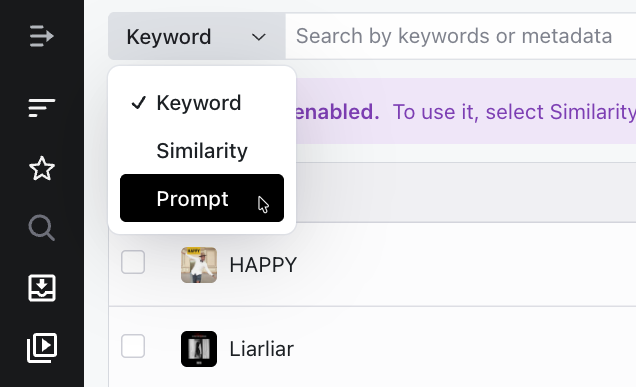
Prompt search
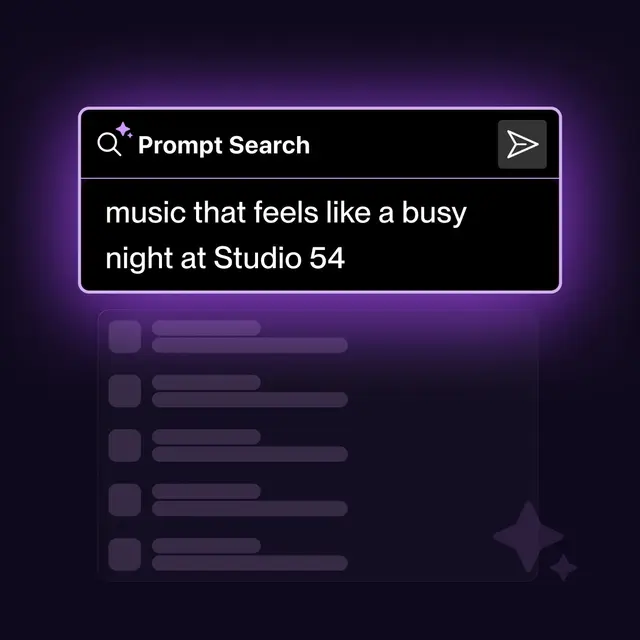
When you do not have a reference track but you know what the music needs to do, prompt search is the tool.
Write naturally - full sentences, creative direction, scene descriptions, emotional tone, pacing, lyrical ideas. AIMS is designed to understand that kind of input.
For example: "I'm looking for restrained piano-led music with emotional vocals for a reflective film scene."
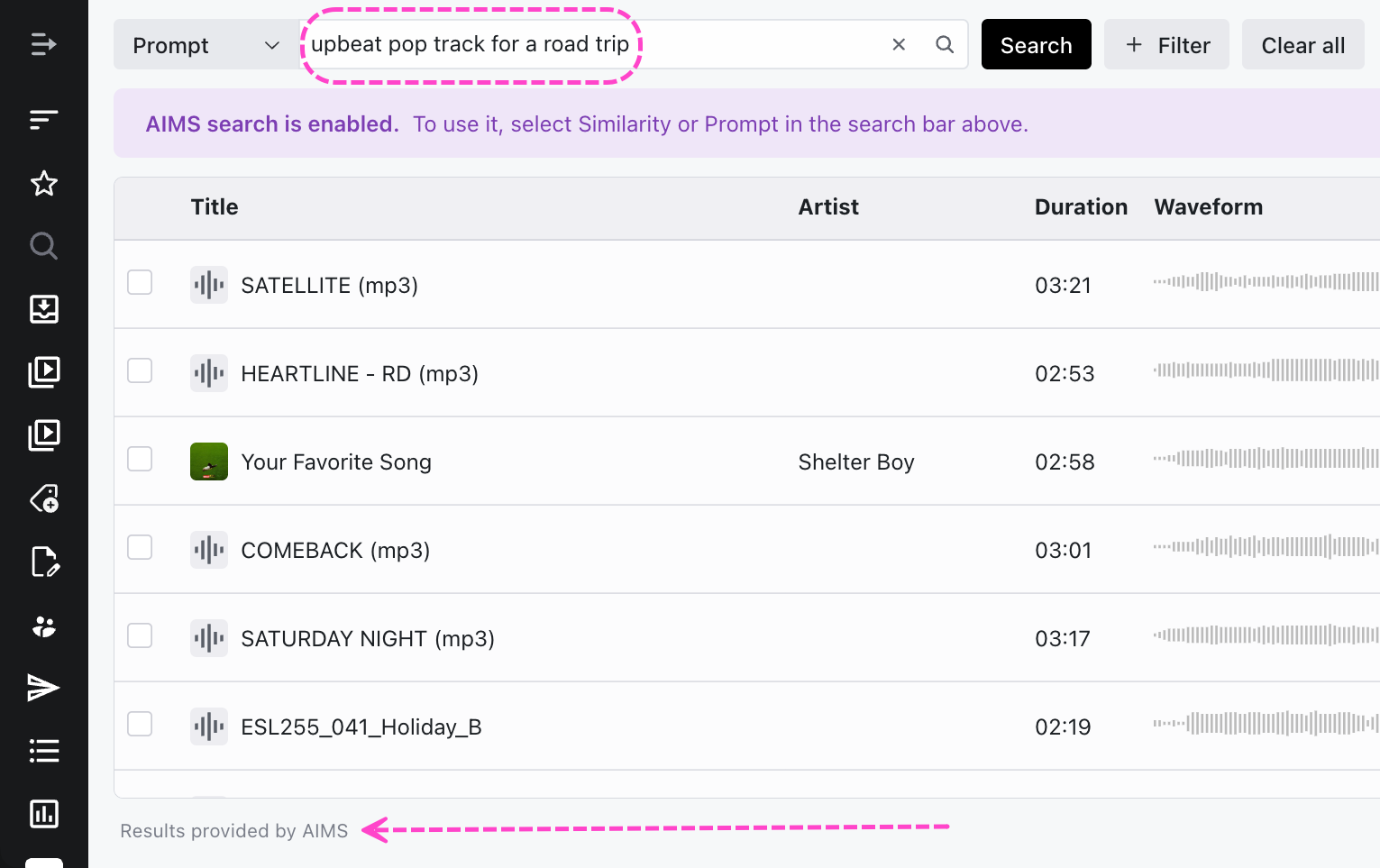
Or: "An upbeat indie pop track for a road trip montage - warm, youthful, not too polished."
You can even paste in a full brief. AIMS reads it the same way a person would and returns results based on the intent, not just the keywords.
This is particularly powerful for briefs that do not fit neatly into genre or mood categories - the kind of creative direction that would be hard to translate into tags but is easy to describe in a sentence.
Getting the most from both
Similarity search and prompt search are complementary. Use whichever fits the situation:
- Reference track available → similarity search
- No reference, but clear creative direction → prompt search
- Both → run both and compare results - they often surface different material
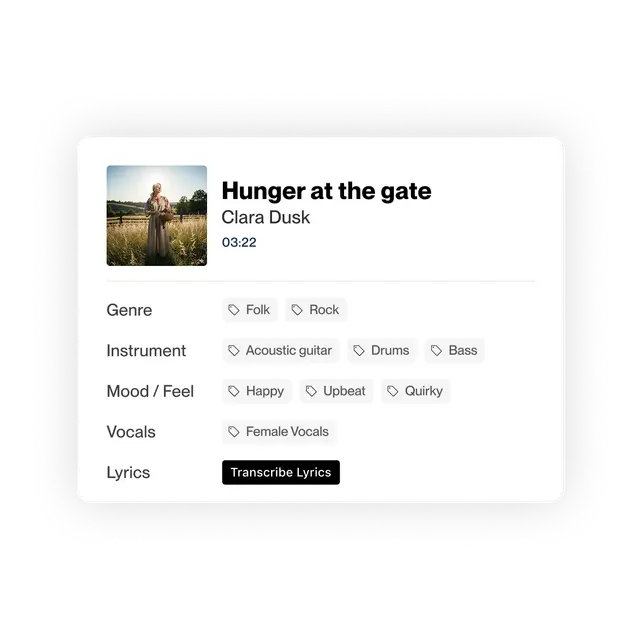
The more of your catalog is auto-tagged and has transcribed lyrics, the better AIMS results become. AIMS can analyze audio directly, so discovery does not depend entirely on perfect metadata - but richer metadata always improves the experience, giving AIMS more context to work with alongside the audio analysis.
Everything stays in one place
The reason AIMS inside DISCO is more useful than a standalone search tool is that discovery stays connected to the rest of the workflow. Once you find strong results, you are already in the workspace where you build playlists, review options, collaborate with your team, and share professionally.
No switching between tools. No exporting results and re-importing them somewhere else. AIMS helps you find the music - DISCO helps you move it through the workflow.
AIMS is a paid add-on
DISCO + AIMS is available as a paid add-on to your DISCO subscription. If you would like to learn more or talk with the team about enabling it, get in touch at sales@disco.ac.
Wrap up
DISCO + AIMS extends what is already a powerful search environment with the ability to search by sound, reference, and plain-language description. For teams working with large catalogs under deadline pressure, it reduces the time spent hunting and increases the likelihood of surfacing exactly the right track - including the ones that would otherwise stay buried.